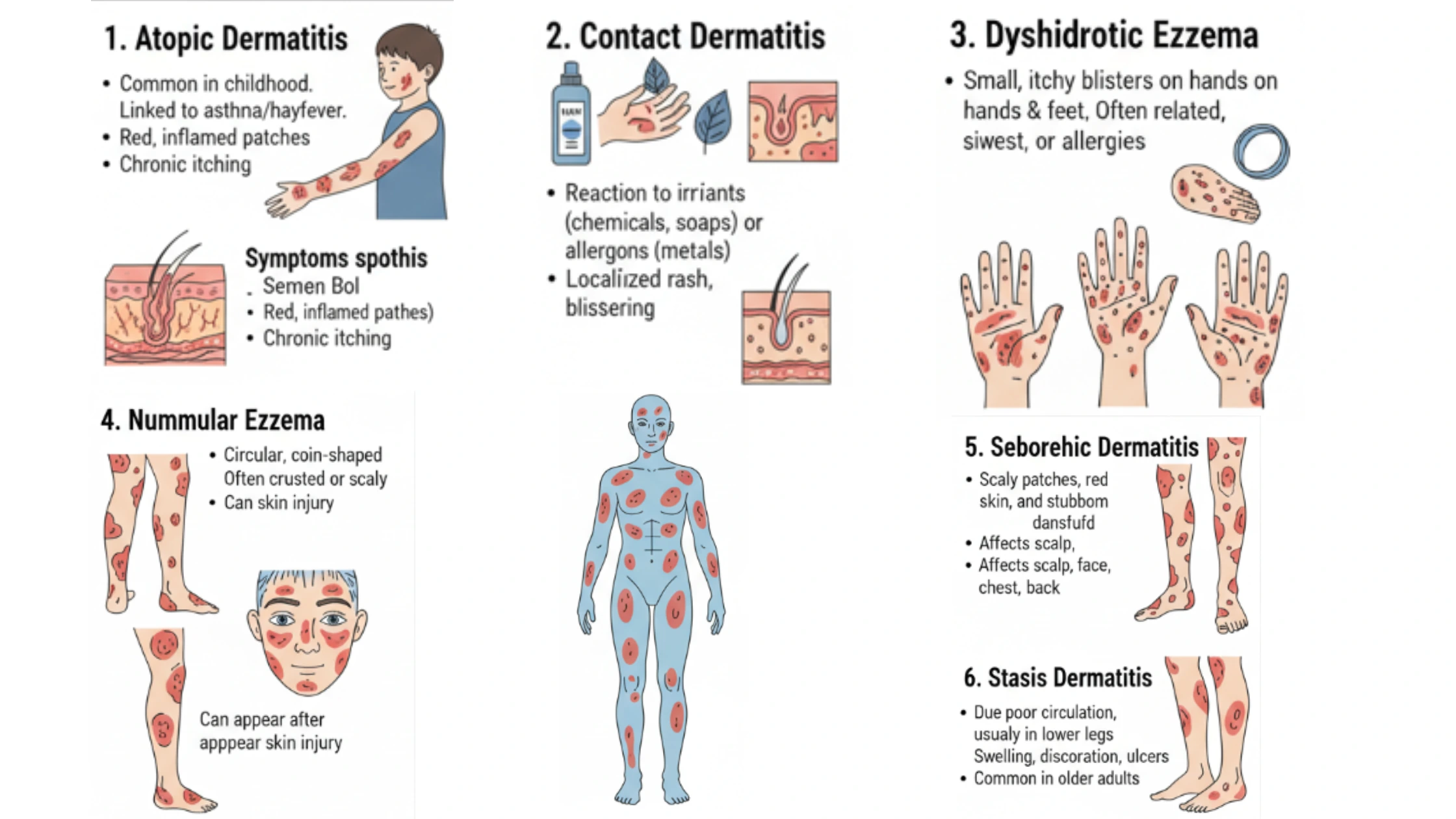
Eczema is a common skin condition characterized by red, inflamed, and itchy skin. It can appear in various forms, each with distinct symptoms, triggers, and treatment approaches. Knowing the different types of eczema is crucial for effective management. In this blog, we will explore the seven most common types of eczema, including their symptoms, causes, and possible treatments.
1. Atopic Dermatitis
Overview
Atopic dermatitis, also known as atopic eczema, is the most common and chronic form of eczema. It often begins in childhood and can persist into adulthood. This type of eczema is linked to a genetic predisposition and is often associated with other atopic conditions, such as asthma and hay fever.
Symptoms
- Dry, itchy skin
- Red patches, often on the face, neck, hands, or feet
- Thickened skin due to scratching
Causes and Triggers
Atopic dermatitis is thought to be caused by a combination of genetic and environmental factors. An impaired skin barrier allows allergens, irritants, and bacteria to penetrate, leading to inflammation and itching.
Treatment Options
Management typically involves moisturizing the skin regularly, using anti-inflammatory creams (such as corticosteroids), and avoiding triggers like harsh soaps or allergens. In severe cases, biologic drugs may be prescribed.
2. Contact Dermatitis
Overview
Contact dermatitis occurs when the skin reacts to an irritant or allergen. It can be further classified into irritant contact dermatitis and allergic contact dermatitis, depending on the trigger.
Symptoms
- Redness and inflammation
- Itchy or painful skin
- Blisters, in some cases
Causes and Triggers
- Irritant contact dermatitis: Caused by direct contact with harsh chemicals, detergents, or other irritating substances.
- Allergic contact dermatitis: Triggered by allergens like poison ivy, fragrances, or nickel.
Treatment Options
Treatment includes avoiding the irritant or allergen, using antihistamines for itching, and applying topical corticosteroids to reduce inflammation. In severe cases, oral corticosteroids may be required.
3. Dyshidrotic Eczema
Overview
Dyshidrotic eczema, also known as pompholyx, primarily affects the hands and feet. It is characterized by the sudden appearance of small, fluid-filled blisters.
Symptoms
- Itchy, burning sensation
- Small blisters filled with fluid
- Cracked, dry skin after the blisters burst
Causes and Triggers
The exact cause of dyshidrotic eczema is unknown, but stress, hot and humid weather, and exposure to certain metals (such as nickel) are common triggers.
Treatment Options
Treatment usually involves topical corticosteroids to reduce inflammation, antihistamines for itching, and sometimes phototherapy. Keeping the affected area cool and moisturized is also essential.
4. Neurodermatitis
Overview
Neurodermatitis, also known as lichen simplex chronicus, is a type of eczema that is triggered by repeated scratching or rubbing of the skin. This condition often results in thickened, leathery skin patches.
Symptoms
- Thickened, scaly patches of skin
- Intense itching, especially at night
- Dry, cracked skin
Causes and Triggers
The primary cause of neurodermatitis is chronic itching. The more a person scratches, the more it intensifies the itching, creating a vicious cycle. Stress is also a significant trigger for this type of eczema.
Treatment Options
The main treatment approach involves breaking the itch-scratch cycle. This can be done with corticosteroids, antihistamines, and keeping the skin moisturized. Behavioral therapy may also be used to reduce scratching habits.
5. Nummular Eczema
Overview
Nummular eczema is a type of eczema characterized by round, coin-shaped lesions on the skin. It is often mistaken for other skin conditions such as fungal infections.
Symptoms
- Round, red or brownish patches
- Itchy, inflamed skin
- Dry, scaly patches
Causes and Triggers
Nummular eczema can be triggered by dry skin, skin injuries, or allergic reactions. It is commonly seen in individuals with a history of atopic dermatitis or other allergic conditions.
Treatment Options
Treatment typically includes topical steroids to reduce inflammation, moisturizers to prevent dryness, and antihistamines to control itching. In severe cases, phototherapy may be recommended.
6. Seborrheic Dermatitis
Overview
Seborrheic dermatitis primarily affects areas rich in oil glands, such as the scalp, face, and upper chest. It often appears as greasy, yellowish, scaly patches, and is common in infants (known as cradle cap) and adults.
Symptoms
- Red, flaky patches on oily areas of the skin
- Yellowish or white scales
- Itching or burning sensation
Causes and Triggers
The exact cause of seborrheic dermatitis is unclear, but an overgrowth of yeast (Malassezia) on the skin is believed to contribute to the condition. Stress, weather changes, and certain medical conditions can also trigger flare-ups.
Treatment Options
Seborrheic dermatitis is typically managed with medicated shampoos, creams, or ointments containing antifungals or corticosteroids. Regularly cleansing the affected areas and moisturizing can help keep symptoms in check.
7. Stasis Dermatitis
Overview
Stasis dermatitis occurs when poor circulation leads to fluid buildup in the lower legs. This type of eczema is most commonly seen in individuals with chronic venous insufficiency or varicose veins.
Symptoms
- Red, inflamed skin on the lower legs
- Swelling in the legs or ankles
- Skin ulcers or sores
Causes and Triggers
Stasis dermatitis is caused by poor blood circulation, often due to varicose veins or other vascular issues. This results in fluid accumulation, leading to skin changes and inflammation.
Treatment Options
Treatment involves addressing the underlying circulatory issues, such as wearing compression stockings to improve blood flow. Topical treatments like corticosteroids may help reduce inflammation, and in some cases, wound care is necessary for open sores.
Conclusion
Eczema is a complex condition that can manifest in different forms, each with its own set of symptoms and triggers. While some types are more common in children, others, such as seborrheic dermatitis and stasis dermatitis, are more prevalent in adults. Identifying the type of eczema is the first step in managing and treating it effectively. If you experience symptoms of eczema, consult a healthcare professional to determine the most appropriate treatment for your condition. Regular skincare, avoiding triggers, and using the right medications can help keep eczema flare-ups under control, improving your skin health and quality of life.